
The future interpretation center will be located in the greenhouse nursery of the park.
The new center will combine the functions of a historical archive, research and projection rooms, workshop spaces, and service areas open to the public.
The project envisions a comprehensive intervention based on criteria of sustainability, energy efficiency, resource reuse, and improved environmental comfort.
The works have a total budget of €850,000 and an estimated completion time of seven months from the start of construction.
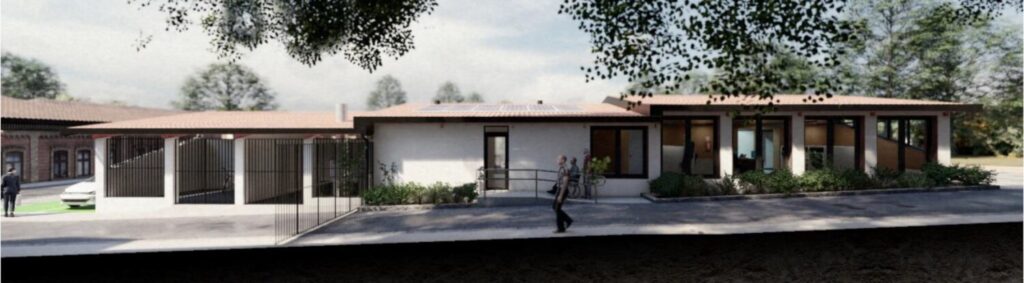
The Madrid City Council, through its Department of Urban Planning, Environment, and Mobility, headed by Borja Carabante, is making progress on the project to refurbish a building located in the Retiro Park Greenhouse Nursery, with the aim of transforming it into an interpretation center.
The building, constructed around 1965, was originally designed as a manure storage facility, a common type of building in nurseries of that era due to the use of pack animals and the use of manure as fertilizer and a heat source for plants. Over time, the building has been repurposed as a warehouse and historical archive for the nursery.
Although it does not possess significant architectural value, the building is a representative example of the traditional operating systems of historical nurseries, giving it considerable educational value. Its restoration will allow this functional history to be preserved and made available to the public.
The project, with a budget of €850,000, has a planned execution period of seven months from the signing of the site handover report. This work is part of the municipal strategy for the conservation and improvement of Madrid’s green spaces, which the City Council has been implementing since 2019 and for which €112 million has been allocated for 132 projects, 113 of which have already been completed.
Research, Outreach, and Public Service
The future interpretation center proposes a reorganization of the building into different modules that will accommodate complementary uses compatible with the nursery’s activities.
The first module will house a research classroom with its corresponding historical archive, while another will house a projection room. The second module will feature an open-plan classroom for workshops, designed as a flexible space prepared for future climate control. Existing facilities will also be restored, adapted for public use, and made accessible.
The final module will house nursery storage and the mechanical room. The new interpretation center is conceived as a space that integrates production, research, archives, and citizen participation, fostering interaction between the nursery and the community.
Sustainable Architecture and Energy Efficiency
The project prioritizes the use of sustainable, recyclable, or reusable materials, favoring low-environmental-impact solutions such as straw and rock wool in insulation systems. The building’s renovation has been designed to offer high levels of comfort and indoor environmental quality, while reducing energy consumption compared to traditional buildings.
Among the most notable measures is the implementation of a rainwater harvesting system, which utilizes the roof surfaces and existing wells to supply water to sanitary fixtures that do not require potable water. A controlled mechanical ventilation system with heat recovery is also planned, regulated by sensors that monitor CO₂ levels inside, thus improving air quality. The main climate control system will be based on a radiant heating and cooling circuit using a high-efficiency air-to-water heat pump.
Construction and Accessibility
The project includes the demolition of the roof, as well as existing windows, floors, and part of the walls. Subsequently, the remaining structural elements will be rehabilitated. A new thermal envelope will be constructed, consisting of prefabricated wood and straw block walls, thermal and acoustic insulation systems, and interior panels, along with a new insulated concrete slab.
The roof will be made of sandwich panels with an insulating core and an aluminum sheet exterior finish, while the new aluminum window and door frames will incorporate thermal break technology and double glazing filled with argon gas.
The project also includes a complete renovation of the plumbing, electrical, ventilation, and air conditioning systems, as well as the installation of new equipment adapted to the intended uses.
The project guarantees compliance with current accessibility regulations, including accessible horizontal routes connecting all areas of the building to each other and to the exterior. These routes will be free of obstacles, with appropriate dimensions, controlled slopes, and sufficient turning spaces. Accessible restrooms are also being designed, and attention has been paid to aspects such as lighting, signage, and paving.
A Unique Site in Madrid
The Retiro Park Greenhouse Nursery, built in 1889, occupies approximately 3.5 hectares and houses a unique collection of historic greenhouses, considered one of a kind in Spain, alongside more modern structures. This space was created to centralize the greenhouses, also known as “estufas” (greenhouses), which were previously scattered throughout the park and other areas of Madrid. It also incorporates other cultivation facilities such as raised beds, old boilers, and exhibition spaces like Greenhouse Number 1, which houses a collection of agricultural and gardening tools.
Today, the nursery continues to operate as an active municipal facility, with a high annual production of seasonal plants for the city’s green spaces, as well as for supplying plants for events and municipal buildings. It also conducts trials to evaluate new plant species and participates in initiatives such as school urban gardens. Since 2019, the site has undergone improvements to enhance accessibility and develop new exhibition spaces, in line with the future interpretation center.